
Can A Landlord Carry Out Their Own Legionella Risk Assessment?
Yes. In some circumstances, landlords can carry out their own Legionella risk assessment.
However, whether that assessment would withstand scrutiny if something went wrong depends on one key question: was it carried out by someone who was competent to assess the risks associated with that particular water system?
Under UK health and safety law, the assessment must be suitable and sufficient, and the person carrying it out must be competent to identify and evaluate the risks associated with the property’s water system.

The law does not prevent landlords from carrying out their own assessment.
However, it does require them to ensure that the assessment is capable of identifying the real risks present within the property’s water system.
Simply completing an online checklist or downloading a template does not automatically demonstrate compliance.
Whether you own a single rental property in Doncaster or manage a portfolio of properties elsewhere in the UK, you remain legally responsible for assessing and controlling the risk of exposure to Legionella bacteria.
Recent publicity has highlighted a growing number of inexpensive online Legionella self-assessment checklists aimed at landlords.
While these may help improve awareness, some landlords may be left with the impression that completing a simple questionnaire is all that is required to comply with their legal duties.
Unfortunately, Legionella control is far more important than paperwork alone.
The key question is not whether a checklist has been completed.
The real question is this:
If something went wrong, could you demonstrate that your assessment was carried out competently and was suitable and sufficient for the property concerned?
That is the question the Health and Safety Executive (HSE), insurers and, if necessary, the courts are likely to consider.
Could you be fined if you get your own Legionella risk assessment wrong? Read our detailed guide to Legionella risk assessment fines, competence and online checklists.
This guide explains what the HSE actually says, what “competence” means in practice, and how landlords can make informed decisions about managing Legionella risks within their properties.
Recent Publicity Has Raised Questions About Cheap Online Legionella Assessments
In recent years, a growing number of inexpensive online Legionella self-assessment tools have been marketed towards landlords.
Many of these products are inexpensive and often promise a quick way to meet legal obligations.
There is nothing inherently wrong with landlords wanting to learn more about Legionella or taking an active role in understanding their responsibilities.
In fact, improving awareness is a positive step.
However, problems can arise if landlords are left with the impression that completing a generic questionnaire is all that is required to comply with the law.
A Legionella risk assessment is not simply an administrative exercise.
It is a practical evaluation of a property’s water system, how that system is used, whether conditions exist that may encourage bacterial growth, and what control measures are necessary to reduce the risk.
No two properties are exactly the same.
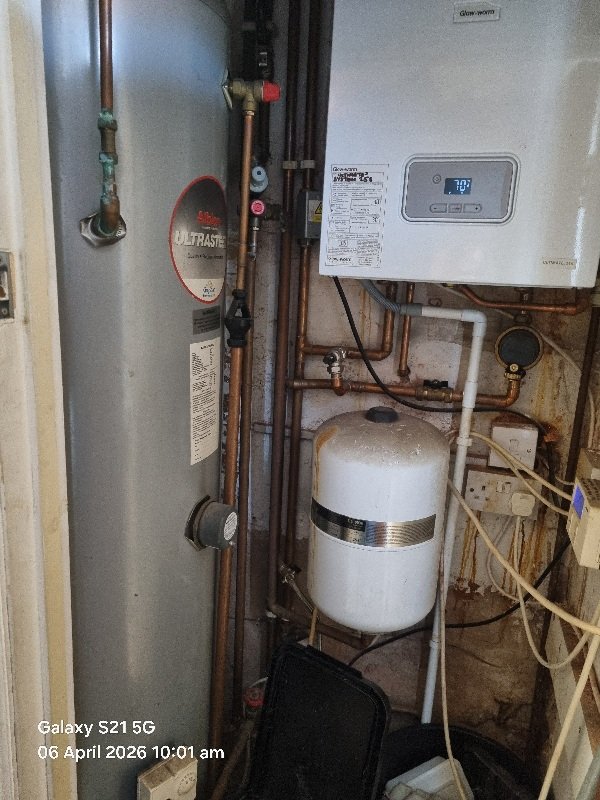
A modern apartment with a combi boiler presents different considerations to an older property with stored hot water, cold water storage tanks, redundant pipework or infrequently used outlets.
For this reason, every assessment should reflect the individual property rather than simply following a standard checklist.
The HSE does not state that landlords must always appoint an external assessor.
What it does require is that the person carrying out the assessment is capable of producing one that is suitable and sufficient for the specific water system being assessed.
Understanding that distinction is the key to understanding your legal responsibilities.
What Does The HSE Actually Say About Competence?
One of the biggest misunderstandings surrounding Legionella risk assessments is the belief that completing paperwork is the same as complying with the law.
It isn’t.
The Health and Safety Executive (HSE) does not simply expect a risk assessment to exist. It expects the assessment to be suitable and sufficient and carried out by someone who has the appropriate level of competence.
The HSE’s Approved Code of Practice (ACOP L8) states that the person responsible for managing Legionella risks should appoint someone with:
“sufficient authority, competence, necessary skills, knowledge of the system and experience.”
The HSE also advises:
“If you are not competent, you should get help.”
These two statements are often overlooked, yet they are central to understanding a landlord’s legal responsibilities.
Importantly, the HSE does not state that every landlord must employ an external Legionella assessor.
Equally, it does not say that completing a generic online questionnaire automatically demonstrates compliance.
Instead, the guidance focuses on whether the person carrying out the assessment has the knowledge and ability to understand the property’s water system and identify any risks that may be present.
This is an important distinction.
The question is not:
“Did you complete a form?”
The question is:
“Could you demonstrate that the assessment was suitable and sufficient for that particular property?”
If a tenant were to contract Legionnaires’ disease and an investigation followed, inspectors would be interested in much more than whether a document existed.
They may ask questions such as:
• Was the water system properly understood?
• Were all significant risks identified?
• Were appropriate control measures recommended?
• Was the assessment appropriate for the type of property?
• Could the person carrying out the assessment demonstrate competence?
These questions go to the heart of what “suitable and sufficient” really means.
What Does “Suitable And Sufficient” Mean?
The phrase “suitable and sufficient” appears throughout health and safety legislation, but what does it actually mean when applied to a Legionella risk assessment?
In simple terms, it means the assessment should properly reflect the individual property’s water system and identify any reasonably foreseeable risks that may be present.
It should not simply consist of generic questions or a standard template that produces the same answers for every property.
A suitable and sufficient Legionella risk assessment should consider factors such as:
• The type of hot and cold water system installed.
• Whether water is stored or supplied directly.
• Water temperatures throughout the system.
• Infrequently used outlets.
• Dead legs and redundant pipework.
• Cold water storage tanks.
• Shower heads and other outlets capable of producing fine water droplets.
• Any conditions that may encourage Legionella growth.
The purpose of the assessment is to understand how the water system actually operates and whether any practical measures are needed to reduce the risk.
This is why two properties that appear similar may require different recommendations. A suitable and sufficient assessment is based on the individual property, not simply on completing a checklist.
What Does “Competent” Actually Mean?
The word competent appears repeatedly throughout HSE guidance, but what does it mean in practice?
Competence is not simply about attending a training course or downloading guidance from the internet.
It is a combination of knowledge, practical understanding, training and experience.
A competent person should be able to recognise features within a water system that may increase the risk of Legionella growth, understand how the system operates, and recommend practical control measures that are appropriate for that specific property.
We provide landlord Legionella risk assessments throughout Doncaster and the surrounding areas, including Rossington, helping landlords meet their responsibilities for managing the risk of Legionella bacteria in rental properties.
Why Experience Matters
Experience allows an assessor to recognise issues that may not be obvious from a written description alone. Understanding how different water systems are installed and used can help identify practical risks that might otherwise be overlooked.
For example, they should be able to recognise issues such as:
• Stored hot water systems.
• Cold water storage tanks.
• Infrequently used outlets.
• Dead legs in pipework.
• Poor hot or cold water temperatures.
• Redundant plumbing.
• Shower heads and other outlets capable of producing fine water droplets.
These are practical issues that cannot always be identified by answering a series of generic questions.
Every property is different.
A landlord who owns a modern apartment with a combi boiler may be dealing with a very different level of risk to someone managing an older property with stored water, complex pipework or little-used outlets.
This is why the HSE places such importance on competence rather than simply on paperwork.
Could You Defend Your Assessment If It Was Ever Questioned?
Fortunately, cases of Legionnaires’ disease linked to domestic rental properties are relatively uncommon.
However, when cases do occur, investigators do not simply ask whether a landlord completed a form.
They look at whether reasonable steps were taken to identify and control the risk.
According to the UK Health Security Agency (UKHSA), there were 472 confirmed cases of legionellosis in the UK during 2024, including 13 deaths.
While relatively uncommon, Legionnaires’ disease can have serious consequences, particularly for older people, smokers and those with underlying health conditions.
If an investigation followed a serious illness, questions might include:
• Was the assessment suitable and sufficient?
• Was the property’s water system properly understood?
• Were genuine risks identified?
• Were appropriate control measures recommended?
• Could the person carrying out the assessment demonstrate competence?
These are the questions that determine whether an assessment has genuinely fulfilled its purpose.
What Does A Professional Legionella Risk Assessment Include?
A professional Legionella risk assessment is far more than a completed checklist.
The purpose of the assessment is to understand how the property’s water system operates, identify any conditions that may encourage Legionella growth and provide practical recommendations to reduce the risk.
Although every property is different, a professional assessment may include:
• Inspection of the hot and cold water system.
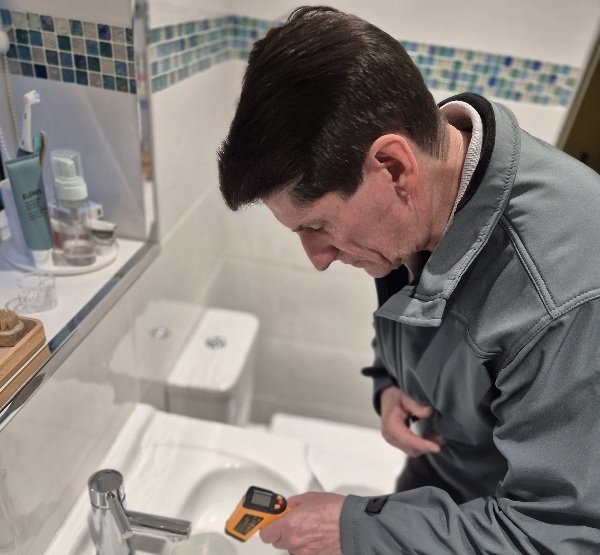
• Hot and cold water temperature testing.
• Identification of stored water systems.
• Inspection for dead legs and redundant pipework.
• Assessment of infrequently used outlets.
• Inspection of shower heads and spray-producing outlets.
• Identification of practical improvements where necessary.
• A written report with property-specific recommendations.
Every recommendation should relate to the individual property being assessed rather than being copied from a standard template.
Professional Legionella Risk Assessments In Doncaster And South Yorkshire
Although the legal guidance explained on this page applies throughout the United Kingdom, Legionella Assessors provides professional Legionella risk assessments for landlords, letting agents, businesses and duty holders throughout Doncaster and South Yorkshire.
As a Doncaster-based Legionella assessor, Paul Watchorn understands the types of domestic and small commercial water systems commonly found throughout the area and provides practical, property-specific assessments rather than relying on generic checklists.
We regularly carry out Legionella risk assessments throughout:
• Doncaster
• Bessacarr
• Armthorpe
• Balby
• Bentley
• Wheatley
• Rossington
• Edenthorpe
• Tickhill
• Conisbrough
• Mexborough
Assessments are carried out by Paul Watchorn ASET, who has over 30 years’ experience carrying out technical assessments and inspections.
His qualifications include recognised training in Legionella risk assessment and water hygiene, supported by previous assessor training through Lloyd’s Register Quality Assurance and City & Guilds.
Every assessment is tailored to the individual property and includes practical inspection, temperature testing and clear recommendations designed to help landlords understand and manage their legal responsibilities.
If you are looking for a professional Legionella risk assessment in Doncaster or South Yorkshire, you can find more information here:
Legionella Risk Assessments in Doncaster
https://legionellaassessors.co.uk/
If you would like to understand your legal responsibilities in greater detail, you may also find our Legionella Responsible Person Training useful.
Reviewing Your Legionella Risk Assessment
A Legionella risk assessment is not intended to be completed once and then forgotten.
The HSE recommends that assessments are reviewed regularly and whenever there is reason to believe they are no longer valid.
Examples include:
• Changes to the property’s water system.
• Plumbing alterations.
• A change of tenant or building use.
• Periods when the property has been empty.
• Any indication that existing control measures are no longer effective.
Regular reviews help ensure that the assessment continues to reflect the property’s current water system and any changes that may affect Legionella risk.
Frequently Asked Questions
Can landlords carry out their own Legionella risk assessment?
Yes. However, the assessment should be suitable and sufficient, and the landlord should be competent to understand the property’s water system and identify any significant risks.
Does the HSE require me to employ a professional assessor?
No. The HSE does not state that every landlord must appoint an external assessor. However, if you are not competent to carry out a suitable and sufficient assessment, the HSE advises that you should get help.
Is an online Legionella checklist enough?
An online checklist may help improve awareness, but it cannot guarantee that an assessment is suitable and sufficient for every property. The landlord remains legally responsible for managing Legionella risks.
What does “competent” mean?
Competence is a combination of knowledge, training, practical understanding and experience that enables someone to identify and assess the risks associated with a property’s water system.
How often should a Legionella risk assessment be reviewed?
The HSE recommends reviewing the assessment regularly and whenever there is reason to believe it is no longer valid, such as changes to the water system, changes in occupancy or if the property’s use changes significantly.
References
Health and Safety Executive – Managing the Risk of Legionella
https://www.hse.gov.uk/legionnaires/what-you-must-do/manage-the-risk.htm
Health and Safety Executive – Approved Code of Practice L8
https://www.hse.gov.uk/pubns/books/l8.htm
UK Health Security Agency – Legionnaires’ Disease Statistics
https://www.gov.uk/government/collections/legionnaires-disease-guidance-data-and-analysis
Competence Matters Because People’s Health Matters
In many cases, problems remain hidden until somebody becomes seriously ill.
Legionella bacteria cannot be seen, smelt or tasted.
That is why a Legionella risk assessment should never be viewed as “just another form.”
Whether you choose to carry out your own assessment or appoint a professional, the important question remains the same:
Could you demonstrate that the assessment was suitable and sufficient, and carried out by someone who was competent to identify and evaluate the risks associated with that property’s water system?
Ultimately, the purpose of a Legionella risk assessment is not simply to produce paperwork.
It is to understand the water system, identify any foreseeable risks and protect the health of the people who live in, work in and visit the property.
