
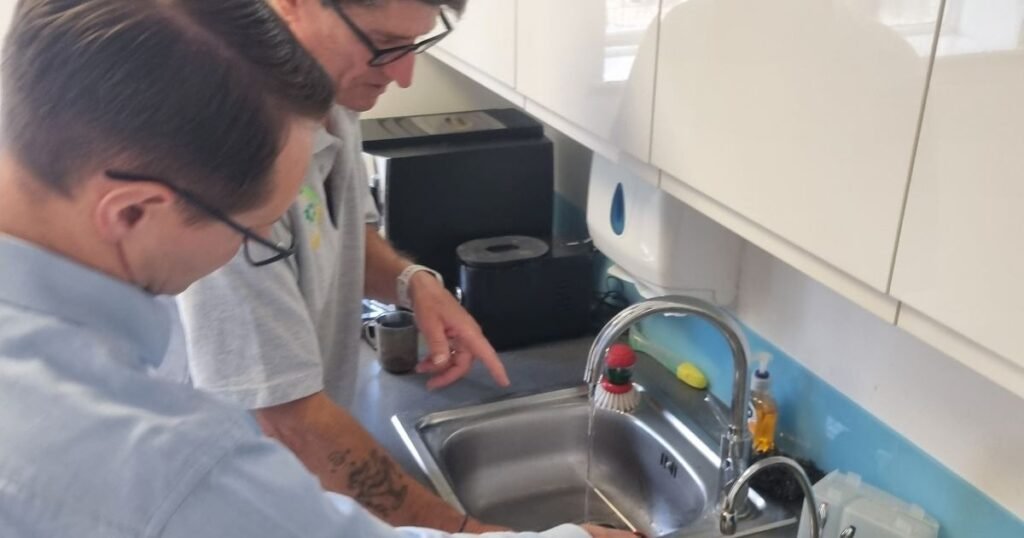
What Is a Little-Used Water Outlet and Why Does It Matter for Legionella Control?
What does “little-used outlet” mean?
A little-used outlet is a tap, shower or other water outlet that is used infrequently enough for water to remain in the associated pipework for extended periods. The exact pattern will vary from building to building. A washbasin in a spare room, a shower in an unused changing area or a sink in a rarely occupied office may all become little-used outlets.
The important issue is not the label attached to the room. It is whether water is moving through that part of the system often enough to avoid prolonged stagnation. A room may be occupied every day while one particular tap is almost never used. Conversely, an outlet in a quieter area may still receive regular use.
This is why a Legionella risk assessment should consider how the building is actually used rather than relying only on a list of rooms or fittings.
Why can stagnation increase Legionella risk?
Legionella control in hot and cold water systems relies on several factors, including system design, water temperature, cleanliness and avoiding conditions that encourage bacterial growth. Stagnant or slow-moving water can undermine those controls.
Where water remains in pipework for long periods, it may warm or cool towards temperatures that are more favourable to bacterial growth. Stagnation can also contribute to deterioration in water quality and may occur alongside other risk factors such as scale, sediment or poorly designed pipework.
HSE technical guidance for hot and cold water systems therefore treats little-used outlets as an issue that should be identified and managed as part of the overall control scheme.
Where are little-used outlets commonly found?
They can occur in almost any type of premises. Common examples include spare bedrooms in residential or care settings, staff showers that are rarely used, redundant sinks left after a room has changed purpose, seasonal areas, empty offices, accessible facilities that receive little use, and outlets in properties that are vacant between occupancies.
The risk can change over time. A tap that was used frequently when a department was fully occupied may become little-used after staff move to another floor. A bedroom may become vacant. A business may change its working pattern. That is one reason Legionella controls should be reviewed when circumstances change.
How should little-used outlets be identified?
The starting point is to understand the water system and the way the premises operates. During a suitable Legionella risk assessment, the assessor should look beyond the visible condition of taps and showers and consider patterns of use.
The person managing Legionella controls also needs a practical way of knowing when an outlet becomes infrequently used. In a small building this may be straightforward. In a care home, school or larger commercial premises, communication between maintenance staff, managers and the appointed Responsible Person becomes more important.
A simple outlet list or schematic can help. What matters is that the organisation can identify relevant outlets, apply the control measure required by its risk assessment and keep appropriate records.
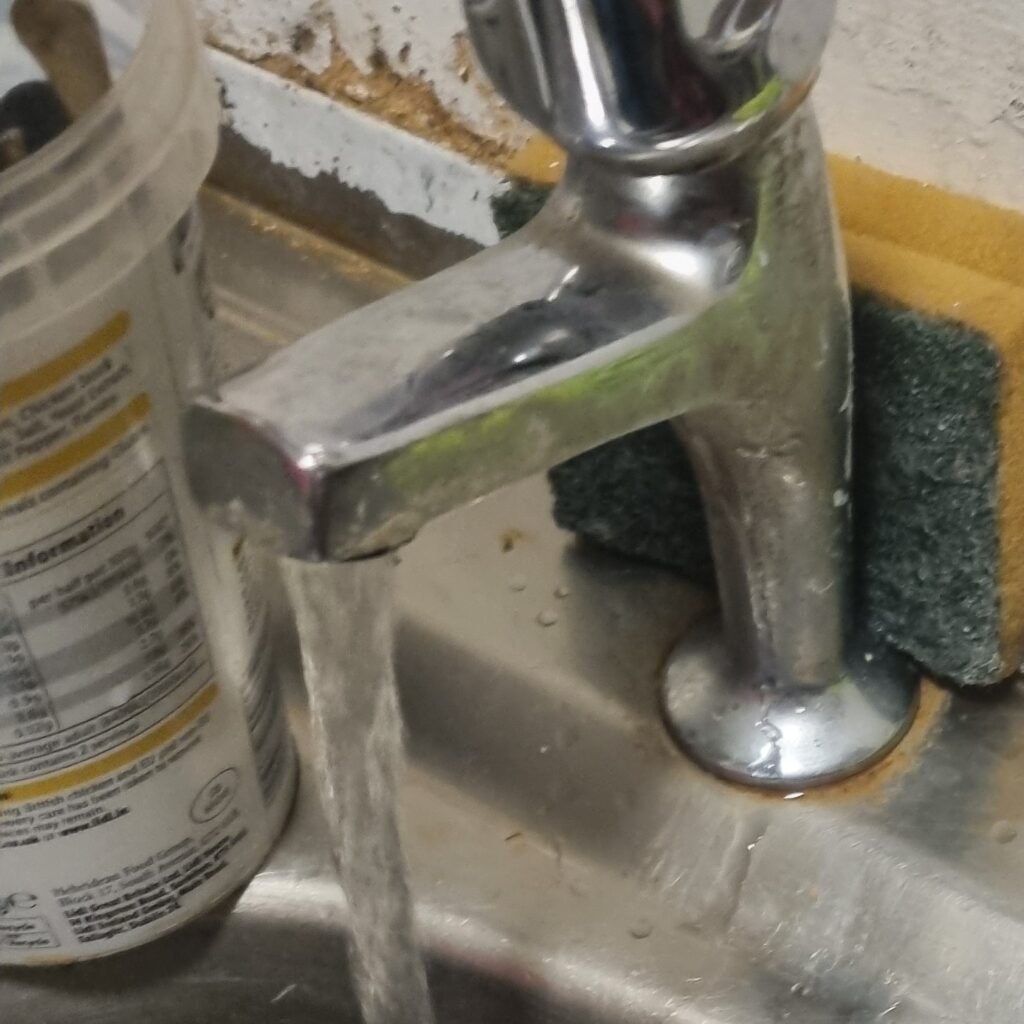
What is flushing and why is it used?
Flushing means running water through an outlet so that stagnant water in the branch pipework is displaced by water from the circulating or mains system. It is a common control measure for outlets that cannot simply be removed and that are not used often enough through normal occupancy.
The correct flushing arrangement should come from the risk assessment and control scheme for the premises. It should be carried out in a way that minimises unnecessary aerosol production and avoids creating other hazards such as scalding.
Flushing should not become a substitute for correcting avoidable system problems. If an outlet is genuinely redundant, the better long-term solution may be to remove the redundant pipework back to an appropriate point rather than maintaining an indefinite flushing programme.
Who should manage the flushing programme?
Where a control scheme requires routine flushing, responsibility should be clear. The appointed Responsible Person may oversee the programme while individual checks are completed by trained staff.
The key point is accountability. Someone should know which outlets are included, what needs to be done, whether it has been completed and what action is required if a problem is found.
Our guide to the Role of the Responsible Person for Legionella Control explains the wider management responsibilities. Organisations that need staff to understand monitoring, flushing and record keeping can also consider Legionella Responsible Person Training.
What should be recorded?
Records should be proportionate to the system and the control measures identified. A useful record may identify the outlet, location, date, task completed, person carrying it out and any abnormal observation requiring follow-up.
Records are not valuable merely because a form has been completed. Their purpose is to demonstrate that the control scheme is actually being implemented and to help identify missed checks or recurring problems.
For commercial premises with several outlets or changing occupancy, a professional Legionella risk assessment can help establish which outlets need attention and how the controls fit together.
A practical point for landlords and businesses
A little-used tap may look insignificant, but it can reveal something important about how a building is being operated. The same applies to empty rooms, unused showers and areas that have changed purpose.
Good Legionella management is therefore not just about taking temperatures on the day of an assessment. It involves understanding the system, recognising where water may stagnate and maintaining sensible controls afterwards.
If you are unsure whether little-used outlets have been properly identified in your premises, the issue can be considered as part of a property-specific Legionella risk assessment rather than relying on a generic checklist.
