
Legionella Risk Assessment Template for Landlords
If you are searching for a Legionella risk assessment template for landlords, a Legionella checklist, risk assessment form, PDF or online Legionella assessment, there is one important point to understand before you begin.
A Legionella risk assessment template can help somebody record an assessment. It cannot, by itself, make the person completing it competent to assess the water system.
The Health and Safety Executive (HSE) confirms that most landlords of straightforward domestic properties can assess the risk themselves and do not necessarily need professional training or accreditation.
However, the legal responsibility is to assess and control the actual risk from Legionella.
The requirement is not simply to obtain a completed form, certificate, online report or professionally presented PDF.
The important question is therefore not simply:
“Have I completed a Legionella risk assessment template?”
It is:
“Have I properly understood this water system, identified the foreseeable risks and put suitable controls in place?”
You can read the official HSE guidance on Legionella and landlords’ responsibilities.
What Is a Legionella Risk Assessment Template?
A Legionella risk assessment template is a document used to help record information about a property’s hot and cold water system and the potential for exposure to Legionella bacteria.
Depending on the template, it may contain questions relating to:
- how cold water enters the property
- how hot water is produced
- whether water is stored
- water temperatures
- showers and other aerosol-producing outlets
- little-used outlets
- redundant pipework
- possible stagnation
- cold water storage tanks
- hot water cylinders
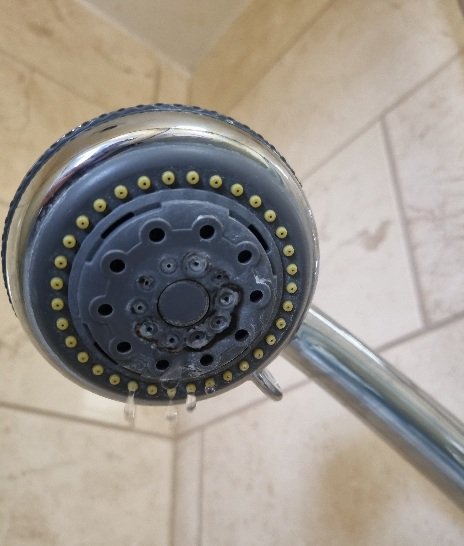
- scale, sediment and corrosion
- vulnerable occupants
- control measures
- actions required
- future monitoring or review
For somebody who understands what these things mean and can correctly examine the property, a well-designed template can be a useful recording tool.
However, there is an important distinction between a document that asks the right questions and a person who is capable of answering those questions correctly.
A Legionella Checklist Is Not the Same as a Legionella Risk Assessment
This distinction is extremely important for landlords considering a downloadable or online Legionella risk assessment checklist.
Imagine that a checklist asks:
“Is there any redundant pipework?”
Reading that question is easy.
Correctly establishing the answer may not be.
The person carrying out the assessment needs to understand what redundant pipework is, recognise where it may exist and appreciate why areas of low flow or stagnation may affect Legionella risk.
The same principle applies if an online Legionella template asks:
Is water stored?
Are temperatures satisfactory?
Are there little-used outlets?
Is there evidence of stagnation?
Is there a cold water storage tank?
Are there susceptible occupants?
Are suitable control measures in place?
A template can ask each of these questions.
It cannot see the water system.
It cannot identify something that the person completing it has failed to recognise.
That is the fundamental difference between completing a checklist and carrying out a risk assessment.
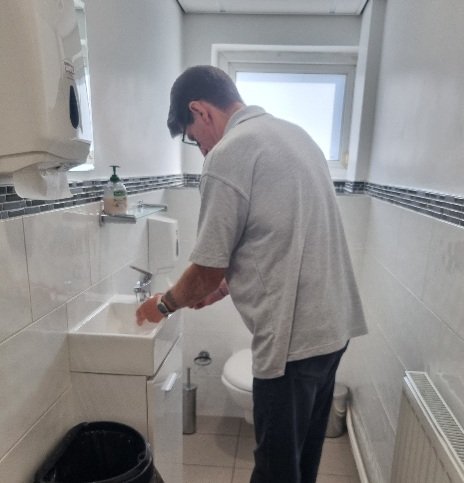
Can a Landlord Carry Out Their Own Legionella Risk Assessment?
Yes.
This is an important point because there is considerable confusion online about landlord Legionella assessments.
The HSE states that, in most cases, the actions required of domestic landlords are simple and straightforward and that most landlords can assess the risk themselves.
Many ordinary domestic rental properties have relatively simple water systems.
For example, a small occupied property with:
- mains-fed cold water
- no cold water storage tank
- a combi boiler or other instantaneous hot water system
- frequent water use
- good water turnover
- regularly used outlets
may present relatively low Legionella risk.
A simple assessment may establish that the risks are low and already being properly managed.
However, HSE also states that somebody carrying out an assessment needs to understand the water system and associated equipment and identify whether conditions exist that could create Legionella risk.
You can read the HSE guidance on identifying and assessing sources of Legionella risk.
We have also produced a detailed guide explaining whether a landlord can carry out their own Legionella risk assessment.
Does Following a Legionella Template Make a Landlord Competent?
Not automatically.
Instructions, information and guidance can clearly help somebody understand their responsibilities.
But following a step-by-step process or completing an online form does not itself demonstrate that somebody understands the water system sufficiently to identify all relevant risks.
The HSE describes a competent person as somebody with sufficient training and experience or knowledge and other qualities to assist properly.
HSE guidance also says that the person responsible for assessing the risk needs to understand the water system, its associated equipment and its constituent parts.
That can include understanding whether:
- water temperatures create conditions favourable to Legionella
- water is stored or recirculated
- stagnation may occur
- nutrients such as rust, sludge, scale, organic matter or biofilm may be present
- water droplets capable of being inhaled can be produced
- people particularly susceptible to infection may be exposed
The template is therefore only one part of the process.
The person using it still has to understand what they are examining.
The Difference Between a Legionella Report and a Legionella Risk Assessment
A completed Legionella report can look extremely professional.
It might contain:
- the property address
- landlord details
- photographs
- tick boxes
- risk ratings
- recommendations
- a date
- a reference number
- a registration number
- a timestamp
- a downloadable PDF
But the appearance of the finished document does not determine whether the underlying assessment was suitable.
A Legionella risk assessment is the process of examining and understanding the water system, identifying foreseeable hazards, evaluating the risk and deciding what controls are required.
The report records the findings of that process.
That distinction matters.
A professional-looking document cannot identify a hazard that the person completing the assessment did not recognise.
What Should a Landlord Legionella Risk Assessment Consider?
There is no single water system installed in every rental property.
That is one reason why a generic Legionella template should not be mistaken for the assessment itself.
The assessor needs to consider the property in front of them.
Understanding the Water System
The starting point is understanding how the hot and cold water system operates.
Depending upon the property, this can include:
- incoming mains water
- cold water storage
- boilers
- hot water cylinders
- calorifiers
- distribution pipework
- showers
- taps
- thermostatic mixer valves
- flexible hoses
- expansion vessels
- little-used outlets
- redundant sections of pipework
HSE specifically says that the person responsible needs to understand the water system and associated equipment.
Water Temperature
Temperature is an important factor in controlling Legionella.
The assessment should consider whether the system is operating in a way that helps prevent conditions favourable to bacterial growth.
For most domestic hot and cold water systems, HSE describes temperature as one of the most reliable ways of controlling the risk: keep the hot water hot, cold water cold and keep it moving.
More information is available in the HSE guidance on hot and cold water systems.
Stored Water
Some properties contain cold water storage tanks or stored hot water.
Where storage exists, the assessor may need to consider matters such as:
- condition
- temperature
- turnover
- contamination
- insulation
- configuration
- whether stored water is being unnecessarily retained
A landlord who does not realise that stored water is present may give an incorrect answer before the online assessment has really begun.
Stagnation and Little-Used Outlets
Legionella risk can increase where water remains stationary for extended periods.
Relevant examples can include:
- spare bathrooms
- rarely used showers
- unused sinks
- outside taps
- empty bedrooms
- vacant properties
- properties empty between tenancies
- long pipe runs
- redundant outlets
HSE advises that water should not be allowed to stagnate and gives specific guidance for properties left vacant for extended periods.
Showers and Aerosols
Legionnaires’ disease is contracted through inhalation of small droplets of contaminated water.
Showers are particularly relevant because they produce aerosols that can be inhaled.
The assessment therefore needs to consider shower use, condition and any appropriate controls.
Scale, Sediment and Other Nutrients
HSE identifies substances such as rust, sludge, scale, organic matter and biofilms as factors that can help provide favourable conditions for Legionella.
Recognising these conditions requires more than simply knowing that a checkbox exists on a template.
Vulnerable Occupants
The consequences of exposure may be greater for certain people.
HSE identifies increased susceptibility associated with factors including age, illness and weakened immunity.
The people using a property can therefore form part of the assessment.
Is There an Official HSE Legionella Risk Assessment Template for Landlords?
HSE provides detailed guidance explaining what landlords need to do, how risks should be assessed and how straightforward domestic risks can be controlled.
However, health and safety law does not revolve around obtaining one particular branded landlord Legionella form.
The duty is to assess and control the risk.
This is an important distinction for anybody searching for an HSE Legionella risk assessment template, Legionella risk assessment form or Legionella risk assessment PDF.
A document can assist with record keeping.
It is the quality of the assessment and management of the risks that ultimately matters.
Read the HSE landlord Legionella guidance for the regulator’s current position.
Do Landlords Need a Legionella Certificate?
Not in the way the term is sometimes used online.
The HSE specifically states that health and safety law does not require landlords to obtain or produce a “Legionella test certificate.”
Testing for Legionella should also not be confused with carrying out a Legionella risk assessment.
Routine microbiological sampling is not normally required for straightforward domestic hot and cold water systems.
The important requirement is that the landlord assesses and controls the risk.
Keeping a written record of the assessment may nevertheless be very sensible because it provides evidence of what was considered, what was found and what action was taken.
Does a Legionella Risk Assessment Have to Be Renewed Every Two Years?
No blanket HSE rule says that every domestic landlord must purchase another Legionella risk assessment every two years.
The HSE specifically states:
“The law does not prescribe that the risk assessment be reviewed on an annual or biennial basis.”
Instead, assessments should be reviewed periodically and when circumstances change.
For example, a review may be appropriate after:
- alterations to the water system
- changes to the way the property is used
- periods of vacancy
- changes affecting occupants
- evidence that existing control measures may no longer be effective
- other significant changes affecting the original assessment
A company may choose to give its own product or assessment a fixed expiry date.
That should not be confused with a universal HSE requirement that every landlord must buy a new assessment every two years.
You can verify this directly on the HSE Legionella and landlords’ responsibilities page.
Can I Use a Free Legionella Risk Assessment Template?
There are free Legionella templates, checklists, Word documents and PDF forms available online.
There are also paid online Legionella risk assessment services.
Whether the document costs nothing, £10, £15 or considerably more does not determine whether the underlying assessment is adequate.
A good template used by somebody who genuinely understands the property may provide a useful way of documenting a straightforward assessment.
A paid template does not automatically make an inexperienced user competent.
The important questions remain:
Was the water system understood?
Were the significant hazards identified?
Were suitable controls put in place?
Could the landlord explain and justify the assessment if it were later questioned?
Can an Online Legionella Risk Assessment Guarantee Compliance?
Landlords should be cautious about interpreting words such as “compliant”, “legally protected”, “HSE compliant” or similar descriptions as a guarantee of the legal position.
An online provider can supply:
- software
- a checklist
- instructions
- a template
- record storage
- a PDF report
What ultimately matters, however, is whether the legal duty to assess and control the actual risk has been fulfilled.
A statement generated on a document cannot retrospectively identify a risk that was missed during the assessment.
If an assessment were scrutinised following an incident, the important issues could include what was actually examined, what was identified and what action was taken.
What Are the Legal Consequences of Getting a Legionella Risk Assessment Wrong?
Legionella risk management is not simply an administrative requirement.
Landlords have legal responsibilities for the health and safety of their tenants.
HSE explains that the Health and Safety at Work etc. Act and the Control of Substances Hazardous to Health Regulations provide the legal framework requiring Legionella risks to be assessed and controlled.
Failure to properly manage health and safety risks can lead to enforcement action and, depending upon the circumstances, prosecution.
There is a particularly important statement for landlords on the HSE website.
HSE explains that domestic properties are not normally proactively inspected simply to check whether a landlord has carried out a Legionella risk assessment.
However, if a tenant were to contract Legionnaires’ disease from the water system in their home, the landlord may be liable to prosecution under health and safety law.
HSE goes further and states that the landlord would have to demonstrate to a court that they had fulfilled their legal duty.
That is why the quality of the underlying assessment matters.
A landlord may need to demonstrate what was actually done — not simply show that a document was purchased.
For a more detailed discussion of enforcement and prosecution, read our guide:
Can I Be Fined for Doing My Own Legionella Risk Assessment?
You can also read our broader guide explaining whether a Legionella risk assessment is a legal requirement.
A Cheap Legionella Template Could Be Expensive If Important Risks Are Missed
There is nothing inherently wrong with wanting to keep compliance costs proportionate.
HSE itself says that managing Legionella risk in most straightforward rental properties does not need to be burdensome or expensive.
But price should not become more important than whether the assessment is reliable.
The real cost of an inadequate assessment is not the price paid for the template.
It is the potential consequence of failing to recognise a significant hazard.
A £15 document that accurately records a competent assessment is one thing.
A £15 document that gives someone false confidence after important risks have been overlooked is something very different.
The issue is not the price of the paperwork.
The issue is the competence and accuracy of the assessment behind it.
When Can a Landlord Reasonably Carry Out Their Own Assessment?
Some domestic rental properties genuinely are straightforward and low risk.
For example, consider a small occupied property with:
- wholesome mains-fed cold water
- no cold water storage
- an instantaneous hot water system such as a combi boiler
- frequently used outlets
- good water turnover
- no unusual plumbing arrangements
HSE recognises that a simple risk assessment in this type of property may show that the risks are low and being properly managed.
We do not believe landlords should be frightened into paying for unnecessary services.
The question is whether you understand the property sufficiently to make that judgement reliably.
If you encounter something you do not understand, professional assistance may be the sensible option.
When Should a Landlord Consider Using a Professional Legionella Risk Assessor?
You should consider seeking competent assistance if you are not confident that you understand the water system or the risks it may present.
Professional assistance may be particularly useful where there is:
- stored hot or cold water
- unfamiliar pipework
- altered or extended plumbing
- multiple bathrooms
- multiple showers
- little-used outlets
- prolonged vacancy
- unexplained temperature issues
- more complex plumbing arrangements
- vulnerable occupants
- HMOs or shared accommodation
- previous water hygiene concerns
- uncertainty about what you are looking at
A professional risk assessor does not simply take a blank form to a property and fill it in.
The important part of the work takes place before the boxes are completed.
The assessor examines the water system, identifies the relevant risks and then uses the report to record the findings.
You can see what is involved in our guide:
How a Legionella Risk Assessment Is Carried Out – And How to Use Your Report
Legionella Risk Assessments for Landlords in Doncaster
The information on this page is relevant to landlords throughout Great Britain.
However, if you own or manage a rental property in Doncaster or the surrounding area and would prefer the water system to be physically assessed for you, I provide professional landlord Legionella risk assessments locally.
I am based in Doncaster and regularly assess domestic rental properties for individual landlords, property owners and letting agents.
A local assessment involves looking at the actual water system in your property, rather than simply generating a report from answers entered online.
Depending upon the system, I can consider:
- hot and cold water arrangements
- water storage
- temperatures
- showers
- little-used outlets
- stagnation risks
- condition of relevant components
- unusual system features
- occupancy considerations
- appropriate control measures
You receive a documented risk assessment showing the findings and any practical actions required.
You can read more about my Legionella risk assessment service in Doncaster or my dedicated guidance for landlords requiring Legionella risk assessments in Doncaster.
Areas Around Doncaster We Cover
I also provide Legionella risk assessments for landlords and other clients in communities throughout the Doncaster area.
Local service information is available for:
- Legionella Risk Assessments in Armthorpe
- Legionella Risk Assessments in Rossington
- Legionella Risk Assessments in Askern
- Legionella Risk Assessments in Thorne
- Legionella Risk Assessments in Rotherham
If your rental property is elsewhere close to Doncaster, please contact me to check whether I cover your area.
Outside Doncaster? Find a Legionella Risk Assessor Near You
This website is also home to a national directory of Legionella risk assessors.
If your property is outside the Doncaster area and you would prefer a professional to carry out the assessment, use our:
Find a Legionella Assessor – UK Directory
You can search by postcode or location to find an assessor covering your area.
Legionella Risk Assessment Template FAQs
Can a landlord carry out their own Legionella risk assessment?
Yes. HSE states that most domestic landlords can assess straightforward Legionella risks themselves.
The important consideration is whether the landlord understands the water system and can properly identify and control any foreseeable risks.
More information is available in our guide: Can a Landlord Carry Out Their Own Legionella Risk Assessment?
Does a Legionella risk assessment have to be carried out by a professional?
Not necessarily for a straightforward domestic rental property.
HSE specifically states that most landlords can assess the risk themselves and do not need to be professionally trained or accredited.
If the landlord does not feel competent or does not wish to undertake the assessment, they can arrange for another person to do it.
Does completing a Legionella checklist make me competent?
No.
A checklist may assist somebody in recording an assessment, but completing it does not itself establish that the user understands the water system or can identify all relevant hazards.
Can I download a Legionella risk assessment template?
There are numerous downloadable Legionella templates, forms and PDFs available online.
Before using one, remember that the document is a method of recording the assessment. The person completing it is still responsible for accurately assessing the property and managing any risks identified.
Can I use a free Legionella risk assessment template for a rental property?
Potentially, yes.
The price of a template does not determine whether an assessment is suitable. What matters is whether the person using it understands the water system and carries out the assessment properly.
Is an online Legionella risk assessment legally valid?
There is no simple rule saying that an assessment is legally valid merely because it is online or invalid merely because it is online.
The important issue is whether the landlord has properly assessed and controlled the foreseeable risk.
The method used to produce the final document does not remove that underlying responsibility.
Does a Legionella risk assessment need a certificate?
HSE states that health and safety law does not require domestic landlords to obtain or produce a “Legionella test certificate”.
A documented risk assessment can nevertheless provide useful evidence of what was assessed and what actions were taken.
Does a landlord Legionella risk assessment expire after two years?
There is no universal two-year expiry imposed by HSE.
HSE states that the law does not prescribe annual or biennial review. The assessment should instead be reviewed periodically and when circumstances change.
Do landlords need Legionella testing?
Routine Legionella sampling is not normally required for ordinary domestic hot and cold water systems.
Testing should not be confused with carrying out a risk assessment.
Can a landlord be prosecuted for failing to control Legionella?
Yes, depending upon the circumstances.
HSE specifically states that if a tenant contracted Legionnaires’ disease from the water system in their home, the landlord may be liable to prosecution and could have to demonstrate to a court that their legal duty had been fulfilled.
Read more in our guide to Legionella risk assessment fines, prosecution and landlord competence.
What is the safest option if I do not understand my water system?
If you cannot confidently identify how the system works or assess the relevant risk factors, seek assistance from someone competent to do so.
For properties in Doncaster and surrounding areas, visit our Doncaster Legionella Risk Assessment service.
Elsewhere in the UK, use our Find a Legionella Assessor directory.
The Most Important Thing to Remember About Legionella Templates
A good Legionella risk assessment template for landlords can be a useful tool.
But the template is not the assessment.
The assessment is the process of understanding the water system, identifying foreseeable risks and deciding how those risks should be controlled.
Before relying upon any free template, paid checklist, online Legionella assessment or downloadable PDF, ask yourself one simple question:
If there was something wrong with this water system, would I know how to recognise it?
If the answer is yes, an appropriate template may help you document what you find.
Should the answer be no, ticking more boxes will not solve the underlying problem.
For landlords in Doncaster and the surrounding area, professional help is available through our Doncaster Legionella Risk Assessment service.
For landlords elsewhere, you can find a Legionella risk assessor near you.
