
Can I Be Fined for Doing My Own Legionella Risk Assessment?
Yes. A landlord can face enforcement action and prosecution if they fail to properly assess and control Legionella risks.
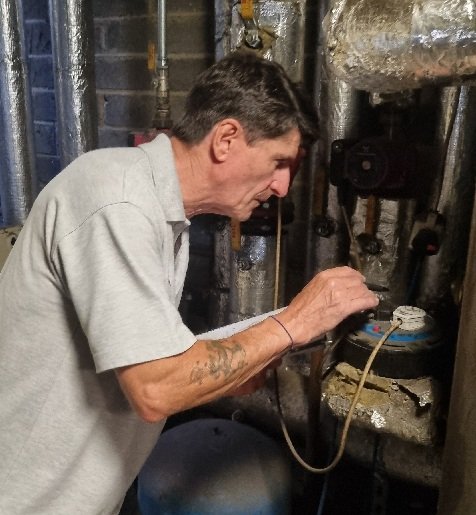
If you carry out your own Legionella risk assessment without being competent to do so and important risks are missed, simply completing an online self-assessment checklist will not protect you.
The Health and Safety Executive (HSE) states that carrying out the risk assessment is the dutyholder’s responsibility.
HSE says that you may be competent to carry out the assessment yourself, but if you are not, you should obtain help and advice from a competent person.
For landlords specifically, HSE’s current technical guidance states that landlords have a legal duty to ensure the risk of exposure to Legionella is properly assessed and controlled.
A landlord can carry out the assessment themselves if they are competent, or employ somebody who is.
That makes the important question:
Are you competent to assess the water system correctly?
Not:
Can you complete an online checklist?
Those are two very different things.
A Legionella Checklist Does Not Make You Competent
Online self-assessment checklists can make a Legionella risk assessment appear very straightforward.
Answer some questions. Tick some boxes. Enter the property details. Download a professional-looking document.
But the document is not what makes the assessment competent.
The person answering the questions must understand what they are looking at and be capable of identifying the risks presented by the actual water system.
HSE says a competent person is someone with sufficient Legionella training and experience, or knowledge and other qualities, to assist properly. Its broader competence guidance describes competence as a combination of training, skills, experience and knowledge, together with the ability to apply them safely.
A checklist can help a competent person carry out an assessment.
It cannot make an inexperienced person competent.
Can Someone Actually Be Prosecuted for Getting a Legionella Risk Assessment Wrong?
Yes — and there is a particularly relevant UK case involving a company that was actually being paid to carry out Legionella risk assessments.
In 2009, DEBA UK Ltd, a water-treatment company providing Legionella risk-assessment services, was prosecuted following assessments carried out at nursing homes in Wales.
Published contemporary accounts report that DEBA had assessed the Legionella risk at the premises as low. Subsequent checks identified inadequate Legionella controls.
At Abertillery Magistrates’ Court on 6 August 2009, DEBA UK Ltd pleaded guilty to three charges under section 3(1) of the Health and Safety at Work etc. Act 1974.
The company was:
fined £24,000
and ordered to pay:
£17,276 in costs.
Why the DEBA Prosecution Matters to Landlords
DEBA wasn’t an inexperienced landlord who had downloaded a form from the internet.
It was a company providing Legionella risk-assessment services professionally.
Yet when its assessments were found to be inadequate, the company itself was prosecuted.
That demonstrates an extremely important point:
Having a Legionella risk assessment document is not enough. The assessment itself has to be carried out properly.
If a company providing Legionella assessments professionally can be held accountable for inadequate assessments, a landlord should not assume that purchasing an online self-assessment checklist removes their responsibility for getting the assessment right.
And there is another important aspect of the DEBA case:
There did not need to be a Legionnaires’ disease outbreak or death before enforcement was taken.
The problem was the inadequate assessments and resulting risk to vulnerable nursing-home residents.
The Form Cannot Take Responsibility for Your Answers
This is where self-completed Legionella assessments can become problematic.
Suppose the online assessment asks:
“Is there any redundant pipework?”
The website isn’t standing in the property inspecting the plumbing.
You are.
If it asks:
“Are there any little-used outlets?”
The website isn’t determining how frequently the outlets are used or whether water may stagnate.
You are.
If it asks whether the hot and cold water temperatures are satisfactory, the website isn’t examining the system, locating stored water, considering circulation or interpreting what the measurements mean.
You are.
The software may record your answers and produce an impressive-looking report.
But the accuracy of the assessment still depends upon the competence of the person providing those answers.
What Does a Competent Legionella Risk Assessor Need to Understand?
HSE says the person responsible for assessing Legionella risk needs to understand the water system and associated equipment and identify whether conditions are likely to create a risk from exposure to Legionella.
Depending on the property, an assessment may therefore require an understanding of matters such as:
- how cold water enters the property;
- whether cold water is stored;
- how hot water is produced and stored;
- water temperatures;
- showers and other aerosol-producing outlets;
- little-used outlets;
- stagnation;
- redundant pipework;
- hot water cylinders;
- cold water storage tanks;
- thermostatic mixing valves (TMVs);
- system alterations;
- scale, sludge and corrosion;
- flexible hoses;
- water turnover; and
- whether occupants may be particularly susceptible to Legionnaires’ disease.
HSE specifically identifies factors including water temperatures between 20°C and 45°C, stored or recirculated water, rust, sludge, scale, organic matter and biofilms, conditions encouraging bacterial multiplication, production of water droplets and susceptible people.
The assessor has to understand the significance of what they find.
Ticking “No” because you don’t recognise a hazard is very different from competently establishing that the hazard isn’t present.
A Professional-Looking Certificate Does Not Prove the Assessment Was Correct
This distinction is particularly important with online self-assessment products.
A generated report may contain:
- the property address;
- the landlord’s details;
- dates;
- risk ratings;
- tables;
- recommendations;
- signatures;
- coloured sections; and
- the words “Legionella Risk Assessment Certificate.”
It can look extremely professional.
But presentation doesn’t establish whether the person inspecting the property understood the water system.
If a significant hazard was missed because the person completing the form didn’t recognise it, generating an attractive PDF afterwards doesn’t correct the assessment.
The DEBA prosecution illustrates the principle perfectly.
The issue wasn’t whether paperwork existed.
The assessments themselves were inadequate.
What If a Tenant Contracts Legionnaires’ Disease?
This is where a landlord’s decision to carry out their own Legionella risk assessment can become extremely important.
HSE states:
“if a tenant were to contract Legionnaires’ disease from the water system in their home, the landlord may be liable to prosecution under HSWA.”
HSE goes on to say that the landlord would have to demonstrate to a court that they had fulfilled their legal duty.
That means the important evidence isn’t simply:
“I have a Legionella certificate.”
Questions could include:
- Who actually assessed the property?
- Were they competent to do so?
- What did they inspect?
- Did they understand the water system?
- Were relevant hazards identified?
- Were appropriate measurements taken?
- Were vulnerable occupants considered?
- Were identified control measures implemented?
- Were recommendations acted upon?
- Was the assessment reviewed when circumstances changed?
A self-generated certificate cannot answer those questions by itself.
“The Website Told Me What to Tick” Does Not Make an Incorrect Answer Correct
Consider a simple example.
An online form asks:
Does the property have a cold water storage tank?
Someone who doesn’t understand the plumbing answers:
No.
There is actually a tank supplying part of the property.
The form isn’t necessarily at fault for recording the answer it was given.
The problem is that the person assessing the property failed to identify part of the water system.
The same problem could arise with:
Little-used outlets
Redundant pipework
TMVs
Stored hot water
Inappropriate temperatures
Stagnation
Showers
Vulnerable occupants
A form can ask a question.
It cannot guarantee that the person answering it understands the question or knows how to investigate it.
What Does HSE Expect a Legionella Risk Assessment to Include?
HSE says the assessment should include matters such as:
- management responsibilities;
- the competent person;
- a description of the water system;
- competence and training of key personnel;
- potential risk sources;
- prevention or control measures;
- monitoring, inspection and maintenance procedures;
- records of monitoring, inspections and checks; and
- arrangements for reviewing the assessment.
This demonstrates why a Legionella assessment is more than simply answering generic questions about a property.
The assessment has to relate those questions to the actual system being assessed.
Can a Simple House Have a Simple Legionella Risk Assessment?
Yes.
This is an important distinction.
Competent assessment doesn’t mean turning every rental property into a complicated engineering exercise.
HSE recognises that Legionella risks in many domestic hot and cold water systems are relatively low because water is regularly used and turned over.
For example, a small property may have:
- mains-fed cold water;
- a combination boiler;
- no stored water;
- regularly used outlets; and
- straightforward plumbing.
A simple assessment may conclude that the risks are low and properly controlled.
But somebody still has to be competent enough to establish that those conditions genuinely exist.
“Low risk” should be the conclusion of the assessment — not an assumption made before the system has been assessed.
What About More Complicated Properties?
This is where reliance on a basic self-assessment can become considerably more questionable.
Consider a property containing:
- stored cold water;
- stored hot water;
- several bathrooms;
- little-used outlets;
- old plumbing alterations;
- TMVs;
- redundant pipework;
- long pipe runs;
- an HMO configuration;
- prolonged periods of vacancy; or
- particularly susceptible occupants.
The person carrying out the assessment needs to recognise these features and understand their significance.
HSE itself says that the level of competence required depends upon the complexity of the situation and the particular help required.
The more complicated the system becomes, the more important genuine competence becomes.
Could I Be Fined If I Get My Legionella Assessment Wrong?
Potentially, yes.
The legal consequences depend upon what has happened, which duty has been breached and the circumstances of the particular case.
Health and safety enforcement can include:
Improvement Notices
Prohibition Notices where applicable
Prosecution
Substantial fines
and certain health and safety offences can carry custodial penalties.
That does not mean making one innocent mistake on a checklist automatically results in a fine or imprisonment.
It means that Legionella duties are legal health and safety responsibilities, not simply administrative paperwork.
Where serious failures occur, the consequences can be serious.
HSE Can Act Before Somebody Becomes Ill
The DEBA prosecution is particularly valuable in demonstrating this point.
There can be a dangerous assumption that Legionella management only matters if somebody actually contracts Legionnaires’ disease.
Health and safety enforcement is intended to prevent harm as well as respond to it.
HSE’s guidance requires people controlling premises to:
identify and assess sources of risk;
manage the risks;
prevent or control them;
and maintain the appropriate arrangements and records.
Waiting until somebody becomes seriously ill is clearly not an acceptable control strategy.
Does an Online Legionella Checklist Have Any Value?
Yes — when used appropriately.
This page isn’t suggesting that checklists themselves are useless.
A good checklist can be extremely useful.
Professional assessors use forms, inspection schedules, software and structured questions too.
The difference is that these tools support the assessor’s knowledge.
They don’t replace it.
Think of it this way:
A checklist reminds a competent person what to look for. It cannot teach an inexperienced person everything they need to know simply by asking them questions.
That distinction is fundamental.
Before Buying an Online Legionella Self-Assessment, Ask Yourself These Questions
If you are considering completing your own assessment, don’t just ask how quickly you can obtain the document.
Ask:
Who is actually carrying out the assessment?
If the answer is me, then ask:
Do I understand the water system?
Can I recognise stored water?
Can I identify potential stagnation?
Do I understand what temperatures should be assessed and why?
Can I identify little-used outlets?
Can I recognise potentially redundant pipework?
Do I understand the significance of TMVs?
Can I identify relevant risk factors?
Do I know when additional controls are required?
Could I explain why I reached every conclusion in the assessment?
And perhaps most importantly:
Could I defend this assessment if a tenant became seriously ill and somebody asked me to explain exactly how I assessed the risk?
If the answer is no, relying solely on an online self-assessment checklist may leave you taking responsibility for technical judgements you are not competent to make.
Who Is Actually Carrying Out the Assessment?
This is something landlords should understand before purchasing any self-assessment product.
Ask whether the company selling the document is:
actually carrying out your Legionella risk assessment
or
providing a system that enables you to carry out your own assessment.
Those are fundamentally different services.
If nobody from the company examines the property, nobody independently assesses the water system and nobody checks whether your conclusions are technically correct, then you may effectively be the assessor.
The website may simply be providing the mechanism for recording your findings.
That isn’t necessarily obvious from the appearance of the final document.
Price Isn’t the Real Issue
An inexpensive Legionella assessment isn’t automatically inadequate.
Equally, an expensive assessment isn’t automatically competent.
The DEBA prosecution actually demonstrates why price isn’t the point: the assessments were being provided professionally, yet they were still found to be inadequate.
What matters is:
Competence
Understanding of the system
Accuracy
Thoroughness
Appropriate conclusions
Suitable recommendations
and ultimately whether the Legionella risks have been properly assessed and controlled.
This is why we prefer the term online self-assessment checklist rather than simply calling these products “cheap assessments.”
The issue isn’t what somebody paid for the document.
The issue is who actually assessed the water system and whether they were competent to do it.
“Other Landlords Use Them” Is Not Evidence of Competence
Online self-assessment products are readily available.
That doesn’t change the underlying legal duties.
Something being available for purchase online does not establish that every person purchasing it has the knowledge necessary to carry out the task correctly.
Likewise:
a professional website isn’t evidence of your competence;
a downloadable certificate isn’t evidence of your competence;
and
successfully completing every box isn’t evidence that the answers were correct.
Competence concerns the ability to understand and apply the necessary knowledge to the actual situation.
What If Nobody Ever Checks My Legionella Assessment?
HSE says inspectors do not proactively inspect ordinary domestic premises simply asking landlords for evidence that they have carried out Legionella assessments.
But HSE immediately follows that with the important warning about what can happen if a tenant contracts Legionnaires’ disease from the home’s water system: the landlord may be liable to prosecution and may have to demonstrate to a court that the legal duty was fulfilled.
That distinction is extremely important.
An inadequate assessment might sit in a folder for years without anybody challenging it.
That doesn’t make it adequate.
The real test could come following:
- an illness;
- a complaint;
- an investigation;
- an inspection;
- a change of occupants;
- a change to the water system; or
- another event that causes the assessment and controls to be examined.
At that point, the quality of what was actually done matters.
The £14 Question
Suppose an online Legionella self-assessment costs £14.
The comparison shouldn’t simply be:
£14 online assessment
versus
the cost of employing an assessor.
The important question is:
What am I actually buying?
If you are buying a form that you must complete, based upon an inspection you must undertake, using conclusions you must reach, then you have not purchased somebody else’s competence.
You have purchased a tool for recording your own assessment.
That is a very different proposition.
Before buying one, landlords should understand that distinction.
Frequently Asked Questions
Can a landlord be fined for doing their own Legionella risk assessment?
A landlord could face enforcement or prosecution where health and safety duties relating to Legionella have been breached. HSE specifically warns that if a tenant contracts Legionnaires’ disease from the water system in their home, the landlord may be liable to prosecution and may need to demonstrate to a court that their legal duty was fulfilled.
Does a landlord need to be competent to carry out a Legionella risk assessment?
Yes. HSE’s current HSG274 technical guidance states that landlords can carry out a risk assessment themselves if they are competent, or employ somebody who is.
Does completing a Legionella checklist make me competent?
No. HSE describes competence in terms of training, skills, experience and knowledge and the ability to apply them. Purchasing or completing a checklist does not itself establish competence.
Can a Legionella risk assessor be prosecuted for an inadequate assessment?
Yes. In the DEBA UK Ltd case, a company providing Legionella risk-assessment services pleaded guilty to three offences after inadequate Legionella assessments at nursing homes in Wales. Contemporary reports record a £24,000 fine plus £17,276 costs.
Is a Legionella certificate proof that the assessment is compliant?
Not by itself. What matters is whether the risk was properly assessed and controlled. A professionally formatted document cannot compensate for significant hazards being misunderstood or missed during the assessment.
Are all domestic properties high risk for Legionella?
No. HSE recognises that many domestic hot and cold water systems are relatively low risk and that a simple assessment may establish that risks are already adequately controlled.
Are online Legionella checklists illegal?
That isn’t the important question. A checklist is simply a tool. The important issue is whether the person using it is competent to carry out the assessment and whether the resulting assessment properly identifies and controls the risks.
The Bottom Line: A Checklist Cannot Give You Competence
There is nothing wrong with using a checklist as part of a Legionella risk assessment.
Professional assessors use structured forms and software too.
But there is a fundamental difference:
The checklist supports the assessor. It does not replace the assessor’s knowledge.
If you don’t understand the water system, don’t recognise the hazards or don’t know how to interpret what you find, ticking every box and downloading a certificate does not solve that problem.
The DEBA prosecution provides an important reminder that even companies providing Legionella risk assessments professionally can be held accountable when their assessments are inadequate.
And HSE’s warning to landlords is equally clear: if a tenant contracts Legionnaires’ disease from their home’s water system, the landlord may face prosecution and may have to demonstrate that their legal duty was fulfilled.
So before asking:
“Can I do my own Legionella risk assessment?”
ask the more important question:
“Am I Competent to Do It?”
Professional Legionella Risk Assessments in Doncaster
Our Legionella risk assessments are based on examining the actual water system within the property, rather than simply completing a generic checklist.
The purpose is not to make straightforward domestic properties unnecessarily complicated.
It is to establish what is actually present, identify relevant hazards, consider the existing controls and provide clear, proportionate recommendations where action is required.
If you are uncertain whether you have the knowledge or experience required to assess your own water system, using a competent assessor means the technical assessment is carried out by someone who understands what they are looking for.
