
Legionella Risk Assessment Askern
Need a Legionella Risk Assessment in Askern? We provide professional Legionella risk assessments for landlords, businesses, property managers and organisations throughout Askern, DN6 and the surrounding Doncaster area.
A suitable Legionella risk assessment identifies potential hazards associated with a property’s hot and cold water systems and records the measures required to manage and control the risk.
Our approach is based on examining the actual water system within the property, rather than simply completing a generic checklist.
Getting it wrong could quite literally land you in hot water.
Anyone carrying out a Legionella risk assessment must be competent to do so, and failing to properly assess and control Legionella risks can have serious consequences.
Where health and safety duties are breached, enforcement action can include prosecution and substantial fines, with imprisonment possible for certain offences.
Whether you are responsible for a rental property, workplace, nursery, commercial building or other premises in Askern, we can assess the water system, identify relevant risks and provide clear recommendations where action is required.
For information about our wider assessment service, visit Legionella Assessors.
Professional Legionella Risk Assessments in Askern
Legionella bacteria occur naturally in water, but certain conditions within man-made water systems can allow the bacteria to multiply.
Risk can increase where factors such as unsuitable temperatures, water stagnation, stored water, scale or poorly managed outlets are present.
The purpose of a Legionella risk assessment is therefore to examine the water system and determine:
- What water systems and assets are present
- Whether conditions capable of supporting Legionella growth exist
- Who could potentially be exposed
- What control measures are already in place
- Whether those controls are suitable
- What additional action may be required
The complexity of the assessment should reflect the complexity of the property.
A small rental house with a straightforward mains-fed water system is very different from a commercial building containing stored water, multiple hot-water systems, showers and numerous outlets.
Legionella Risk Assessments for Landlords in Askern
We provide Legionella risk assessments for landlords with houses, flats and other rental properties throughout Askern and the wider Doncaster area.
Landlords have health and safety responsibilities towards their tenants, which include assessing and appropriately controlling the risk of exposure to Legionella bacteria.
For many ordinary residential properties, the water system is relatively straightforward.
That doesn’t remove the responsibility to consider the risk, but it does mean the assessment and subsequent controls should be proportionate to the property.
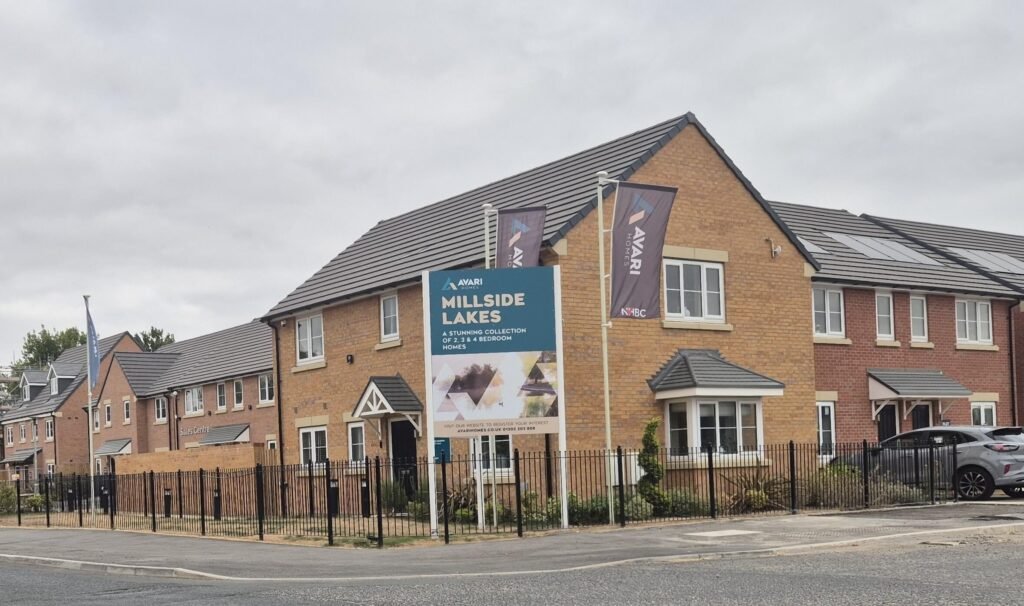
A landlord assessment can consider:
- Incoming cold water supply
- Hot water generation
- Water storage where present
- Hot and cold water temperatures
- Showers
- Flexible hoses
- Little-used outlets
- Signs of scale or corrosion
- Potential areas of stagnation
- Occupancy considerations
- Existing control measures
The assessment provides a documented record of the findings and identifies appropriate actions where required.
For further information specifically for rental property owners, see our Landlord Legionella Risk Assessment Doncaster page.
Legionella Assessments for Businesses in Askern
Legionella responsibilities extend beyond landlords.
Employers and those responsible for workplaces and commercial premises may also need to assess and control risks arising from their water systems.
We can provide assessments for a variety of premises in and around Askern, including:
- Offices
- Shops
- Workshops
- Warehouses
- Industrial premises
- Community buildings
- Nurseries
- Healthcare-related premises
- Hospitality premises
- Educational settings
- Other workplaces
The water systems within commercial properties can vary significantly.
Some small premises have simple systems comparable to a domestic property. Larger buildings may contain storage tanks, calorifiers, showers, thermostatic mixing valves and areas that receive relatively little use.
The assessment therefore needs to reflect what is actually present within the building.
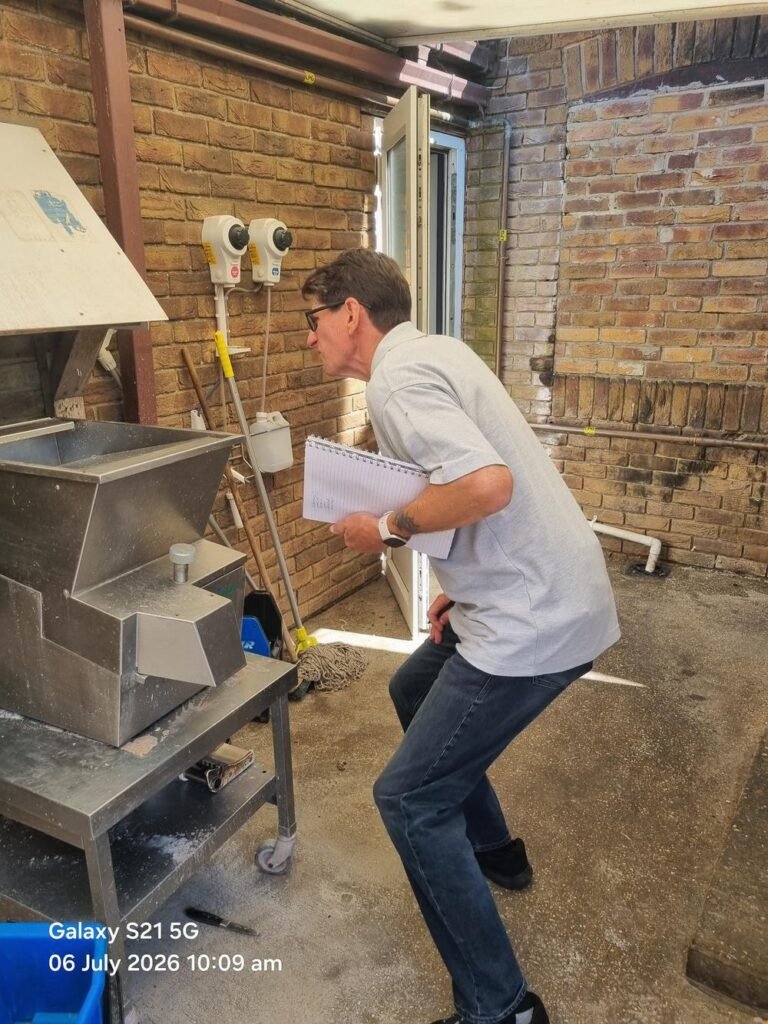
What Happens During a Legionella Risk Assessment?
The assessment involves examining the water system and considering factors that could affect Legionella risk.
Depending upon the type and complexity of the premises, this can include:
- Identifying how cold water enters the building
- Establishing whether water storage is present
- Identifying how hot water is generated
- Examining accessible water-system components
- Taking representative water temperatures
- Identifying showers and other aerosol-producing outlets
- Looking for little-used outlets
- Considering potential stagnation
- Looking for signs of scale or corrosion
- Reviewing existing control arrangements
- Considering people who could potentially be at greater risk
- Identifying remedial or management actions where appropriate
The information is then used to produce the Legionella risk assessment report.
A meaningful assessment should leave the person responsible for the property with a clear understanding of the system and what, if anything, needs to happen next.
What Is Included in the Report?
The precise report will depend upon the property and its water system.
Information can include:
- Property and assessment details
- Description of the water system
- Relevant water assets
- Identified hazards
- Temperature measurements
- Existing controls
- Photographic evidence where appropriate
- Recommended actions
- Risk findings
- Management considerations
- Review information
Where a problem is identified, the recommendation should explain what requires attention rather than simply recording that something has failed a checklist question.
This distinction is important.
A Legionella risk assessment should be useful to the person responsible for managing the property after the assessor has left.
Legionella Risk Assessment Law
Legionella responsibilities arise from health and safety legislation and associated regulations and guidance.
The legal position varies depending upon the nature of the premises and the people responsible for them, but the central principle is that foreseeable risks need to be appropriately assessed and controlled.
For workplaces and businesses, this can include duties under health and safety legislation.
Landlords also have responsibilities towards their tenants.
Our dedicated Legionella Risk Assessment Law guide explains the subject in greater detail.
Can I Carry Out My Own Legionella Risk Assessment?
The important requirement is competence.
A person carrying out an assessment needs sufficient knowledge and understanding to identify the water system, recognise relevant hazards, evaluate the risk and determine appropriate control measures.
Straightforward systems may be easier to understand than complex commercial installations, but the assessment still needs to be suitable and sufficient.
Where the person responsible doesn’t have the necessary knowledge or confidence, using a competent assessor provides an independent assessment of the system and a documented record of the findings.
We also have a guide explaining How to Carry Out a Legionella Risk Assessment.
Do I Need a Legionella Certificate?
People sometimes ask for a “Legionella certificate”, particularly in relation to rental properties.
The important requirement isn’t simply possession of a certificate.
What matters is that the Legionella risk has been properly assessed and that appropriate controls are being implemented.
A professional risk assessment provides a written record showing what was assessed, what was identified and what recommendations were made.
If circumstances subsequently change, the assessment may need to be reviewed.
Does Every Property Need Legionella Water Testing?
No.
A Legionella risk assessment and Legionella laboratory testing are not the same thing.
Routine sampling is not automatically necessary for every straightforward property.
Testing can be appropriate where the characteristics of the system, assessment findings or control history indicate that sampling is necessary or useful.
However, automatically adding laboratory testing to every domestic risk assessment can result in unnecessary cost without necessarily improving the management of the system.
Where sampling is appropriate, we provide Legionella Testing in Doncaster.
Why Water Temperature Matters
Temperature is one of the important factors affecting Legionella growth and control.
For this reason, representative hot and cold water temperatures may be measured during an assessment.
However, the risk assessment isn’t simply a temperature test.
A competent assessment also considers the design and operation of the water system, storage, stagnation, outlets and other relevant factors.
This is particularly important because a satisfactory reading at one outlet doesn’t automatically demonstrate that every part of a larger water system is adequately controlled.
Little-Used Water Outlets
Little-used taps, showers and other outlets can create water-hygiene problems because water may remain within the associated pipework for prolonged periods.
This can occur in:
- Spare rooms
- Little-used toilets
- Empty offices
- Storage or warehouse areas
- Vacant rental properties
- Buildings with seasonal occupancy
- Areas closed for extended periods
Where little-used outlets are identified, regular flushing may form part of the recommended control regime.
In some circumstances, redundant pipework may require further investigation or removal rather than simply flushing the outlet indefinitely.
Showers and Legionella Risk
Legionella infection is primarily associated with inhaling contaminated aerosols — very small droplets of water suspended in the air.
This makes showers and other spray-producing equipment particularly relevant to Legionella control.
Where showers are present, the assessment may consider:
- How frequently they are used
- Water temperatures
- Condition of the shower head
- Flexible hoses
- Scale and deposits
- Cleaning arrangements
- Periods of non-use
Cleaning, descaling and appropriate flushing arrangements can form part of the ongoing control measures where required.
Cold Water Storage
Many modern properties receive their cold water directly from the mains, but some buildings still contain cold water storage tanks.
Where storage is present and accessible, the assessor may consider factors including:
- Tank condition
- Whether a suitable lid is present
- Insulation
- Water temperature
- Evidence of contamination
- Water turnover
- Tank capacity
- Connections and pipework where visible
A tank isn’t automatically a Legionella problem.
The purpose of the assessment is to determine whether its condition and operation could contribute to risk.
Hot Water Systems
The method used to produce and distribute hot water is another important part of the assessment.
Askern properties may contain a variety of arrangements, from straightforward combination boilers to cylinders and more complex commercial systems.
The assessor needs to understand how hot water is generated and whether appropriate control temperatures are being achieved.
In larger systems, additional factors such as circulation, calorifiers and thermostatic mixing arrangements may also need consideration.
Thermostatic Mixing Valves
Thermostatic mixing valves, usually referred to as TMVs, are commonly installed where there is a need to reduce the risk of scalding at an outlet.
They can be particularly relevant in settings occupied by children, older people or other vulnerable individuals.
However, TMVs also need to be considered as part of the overall water-hygiene system.
Where present, their location, use and management arrangements may therefore form part of the Legionella risk assessment.
The Legionella Responsible Person
Businesses and organisations may appoint a Responsible Person to oversee Legionella control measures.
This person should have sufficient authority, knowledge and competence to manage the required controls.
Depending upon the water system and risk assessment, ongoing responsibilities can include:
- Temperature monitoring
- Flushing little-used outlets
- Maintaining records
- Arranging cleaning or maintenance
- Ensuring remedial actions are completed
- Reviewing changes to the water system
- Arranging review of the risk assessment when required
Our guide to The Role of the Responsible Person for Legionella Control explains these responsibilities in more detail.
We also provide Legionella Responsible Person Training for people responsible for managing water safety.
Legionella Training for Askern Businesses
Completing the risk assessment is only part of effective Legionella management.
Where ongoing controls are required, the people responsible need to understand what they are doing and why.
We provide Legionella Training Courses for businesses and organisations requiring practical knowledge of Legionella control.
Training can be appropriate for:
- Responsible persons
- Business owners
- Property managers
- Facilities staff
- Maintenance personnel
- Nursery managers
- Employees undertaking water-temperature monitoring
- Staff responsible for flushing and record keeping
The aim is to help those responsible understand the control measures identified within the risk assessment rather than simply providing them with another piece of paperwork.
Legionella Risk Assessments for Nurseries and Childcare
Nurseries and childcare premises require particular consideration because of the people using the building and the nature of the water systems that may be present.
Potential features can include:
- Numerous hand-washing outlets
- Low-level wash basins
- Thermostatic mixing valves
- Staff facilities
- Kitchen facilities
- Little-used outlets
- Stored water
- Periods of closure
We provide specialist Legionella Risk Assessments for Nurseries in Doncaster as well as Legionella Training for Nurseries and Businesses.
How Often Should a Legionella Risk Assessment Be Reviewed?
There is a persistent misconception that every Legionella risk assessment automatically expires after a fixed period.
The important issue is whether the existing assessment remains suitable and sufficient.
A review may be necessary when:
- The water system changes
- New equipment is installed
- The building’s use changes
- Occupancy changes
- Control measures appear ineffective
- Monitoring identifies a problem
- New information becomes available
- There is reason to believe the existing assessment is no longer valid
The review arrangements should therefore reflect the particular property and its circumstances.
Legionella Assessments Across Askern and Doncaster
Askern forms part of our wider Legionella risk assessment coverage across the Doncaster district.
We already provide dedicated information for customers requiring Legionella Risk Assessments in Armthorpe and Legionella Risk Assessments in Rossington, Hatfield, Thorne and across South Yorkshire
For wider coverage information, see Find a Legionella Assessor.
Frequently Asked Questions
Do landlords in Askern need to consider Legionella?
Yes. Landlords have responsibilities for the health and safety of tenants, including assessing and appropriately controlling Legionella risk.
Does every rental property need water samples taken?
No. Laboratory sampling is not automatically required for every residential property.
Is a Legionella assessment just a water-temperature check?
No. Temperatures can provide useful evidence, but the assessment considers the water system as a whole.
Do you inspect showers?
Where showers are present and relevant to the assessment, their condition, use and associated water arrangements can be considered.
What happens if you find a problem?
The assessment report should identify the issue and provide an appropriate recommendation for managing or correcting it.
Do you assess commercial buildings?
Yes. Assessments can be undertaken for landlords, businesses, workplaces and organisations as well as residential properties.
Do you provide Legionella training?
Yes. We provide training for responsible persons, businesses and organisations responsible for ongoing Legionella controls.
Do you cover areas outside Askern?
Yes. Askern is part of our wider Doncaster and surrounding-area coverage.
Book a Legionella Risk Assessment in Askern
If you require a Legionella Risk Assessment in Askern, we provide professional assessments for landlords, businesses, property managers and organisations throughout Askern, DN6 and the surrounding Doncaster area.
Our assessments are based on examining the actual water system, identifying relevant hazards and providing practical recommendations appropriate to the property.
For information about our wider service, visit Legionella Assessors.
Alternatively, use our Contact Page to discuss your property or arrange an assessment.
