How a Legionella Risk Assessment Is Carried Out – And How to Use Your Report
A Legionella risk assessment is a legal requirement for many property types — including rented homes, childminding settings, nurseries, care environments, workplaces and commercial premises.
But a Legionella risk assessment must be carried out by a trained, competent assessor, not by unqualified individuals using online templates or “DIY checklists”.
This page explains:
- how a professional Legionella risk assessment is carried out,
- what you can expect from your report, and
- how to use your report to manage risks responsibly.
This helps you meet your obligations under ACOP L8, HSG274, and the Health and Safety at Work Act — without putting people at unnecessary risk.
Why You Should Not Attempt a DIY Legionella Risk Assessment
Many downloadable templates and online “tick-box” forms make it look easy to carry out your own risk assessment — but they do not meet the requirements set out in ACOP L8 or HSG274.
DIY assessments are especially dangerous in:
- childcare settings
- childminders’ homes
- nurseries
- care homes and assisted living
- shared buildings
- properties with vulnerable occupants
A proper assessment requires:
- specialist training
- an understanding of plumbing layouts
- temperature profiling
- knowledge of stagnation risks
- identification of dead legs
- the ability to recognise non-obvious hazards
This is why the HSE states the assessment must be carried out by a “competent person” — meaning someone with the correct training, knowledge and experience.
Following a risk assessment, many organisations arrange Legionella Responsible Person Training so staff understand how to implement monitoring and control measures.Some environments need even closer attention, especially where young children or vulnerable people are present. For dedicated guidance, see our services for:
You can learn more about legal responsibilities here:
👉 What the Law Says About Legionella Risk Assessments
And learn about the duty-holder role here:
👉 The Role of the Responsible Person for Legionella Control
How a Professional Legionella Risk Assessment Is Carried Out
A competent assessor will inspect your water system in a structured, evidence-based way.
Here’s what happens during a professional assessment:
1. System Walkthrough
Your assessor will observe:
- the incoming cold water supply
- the boiler, cylinder or combi system
- all hot and cold outlets
- toilets and handwashing areas
- showers and little-used taps
- external taps (where relevant)
This identifies the overall layout and any potential pinch points.
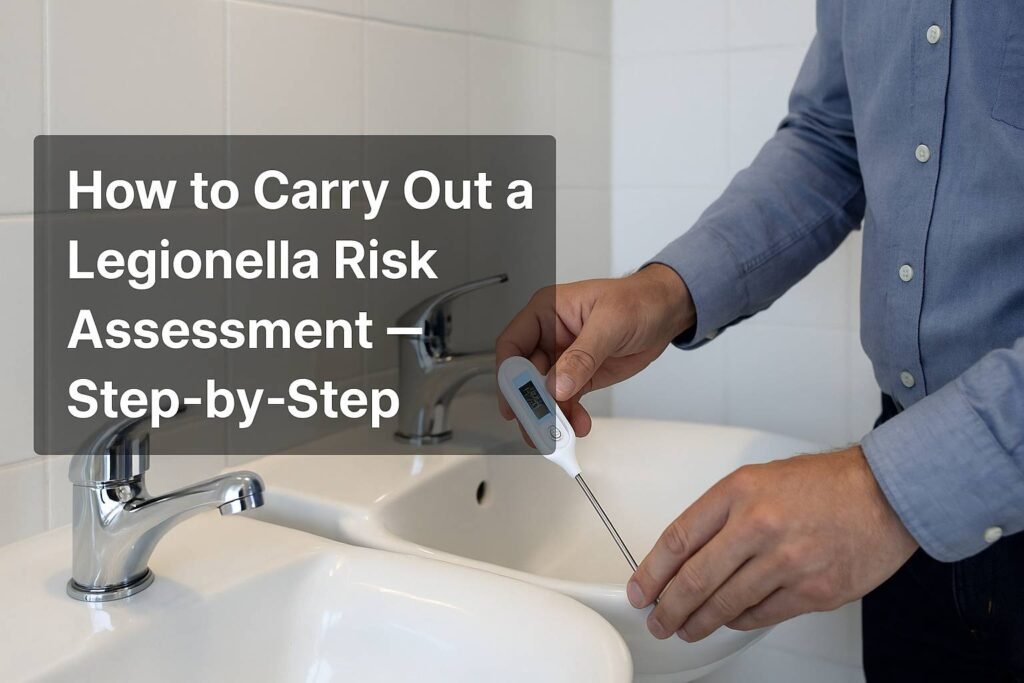
2. Temperature Testing
Your assessor will check:
- hot water reaching 50°C within one minute
- cold water remaining below 20°C
- any “warm zones” where bacteria could multiply
Each reading is documented in the report.
3. Checking for Common Risk Factors
This includes:
- limescale build-up
- biofilm in outlets
- long pipe runs
- dead legs or unused spurs
- rarely used taps
- low-flow outlets
- tanks and poor insulation
These issues cannot be identified using DIY templates.
4. Usage Patterns (Important in Childcare & Care Homes)
Your assessor will consider:
- how often taps are used
- weekend or holiday stagnation
- bottle-washing sinks
- children’s hand-washing routines
- staff-only areas
- how rooms are opened/closed seasonally
This helps create practical, safe control measures.
What You Receive: Your Legionella Risk Assessment Report
A professional report is your working compliance document.
It includes:
Clear Findings
Your assessor explains exactly what was found, what it means, and which areas require attention.
Photographic Evidence
Pictures of risk points, temperature readings, and plumbing features help you demonstrate compliance to inspectors.
Prioritised Recommendations
You’ll receive practical actions such as:
- flushing routines
- descaling frequency
- cleaning schedules
- temperature monitoring advice
- remedial work if needed
Nothing technical — just simple steps a responsible person can manage safely.
Written Scheme of Control
Where required, your assessor provides a WSOC explaining:
- what needs to be checked
- how often
- what to record
- what to do if temperatures fall outside safe ranges
This is particularly important for landlords, childcare providers and care environments.
How to Use Your Legionella Report
Once you have your professional assessment, this is where your responsibilities begin.
You must:
- read the report
- follow the recommendations
- carry out any remedial tasks
- complete simple weekly or monthly routines
- maintain safe temperatures
- keep evidence of what you’ve done
- request reassessment when significant changes occur
This is the responsible and legally compliant approach.
When You Need a New Assessment
You should arrange a reassessment:
- every 2 years (typical for domestic and childcare settings)
- after plumbing or boiler changes
- after long periods of inactivity
- if temperatures become inconsistent
- if new risks are observed
Book a Professional Legionella Assessment
If you need a professional, fully compliant Legionella risk assessment for a:
- home
- rental property
- childcare setting
- nursery
- care home
- small business
…I can help.
👉 Contact me today to arrange your assessment
Frequently Asked Questions
Can I carry out a Legionella risk assessment myself?
You can, but the question to ask yourself is this:
If something went wrong, would you feel confident explaining to an Environmental Health Officer — or a court — that you were genuinely competent to assess a water system against ACOP L8 and HSG274?
Do childminders and nurseries need a professional assessment?
Yes. Anyone responsible for children, vulnerable people or visitors must use a competent assessor.
How often should I repeat the assessment?
Every 2 years, or sooner if the system changes, temperatures fluctuate, or the building is unused for a period.
What do I do with my report?
Follow the recommendations, record simple routine checks, and contact your assessor if anything changes.
Need help carrying out a Legionella risk assessment? Contact us today for expert support across South Yorkshire.